Inequities in the Appalachian Wild-Harvested Herbal Supply Chain
Approximately 50 percent of the medicinal herbs in the North American supply chain are native to the Appalachian Mountains, and a large quantity of the herbal material sold by the herbal products industry is harvested from Central Appalachian forests. The pay that wild harvesters receive for the work they do harvesting these medicinal herbs is strikingly low, however, especially considering that the U.S. herbal supplement industry sold an estimated $15.55 billion in herbal dietary supplements in 2023 and has seen steady growth in sales in almost every year since 2000 (American Botanical Council 2024).
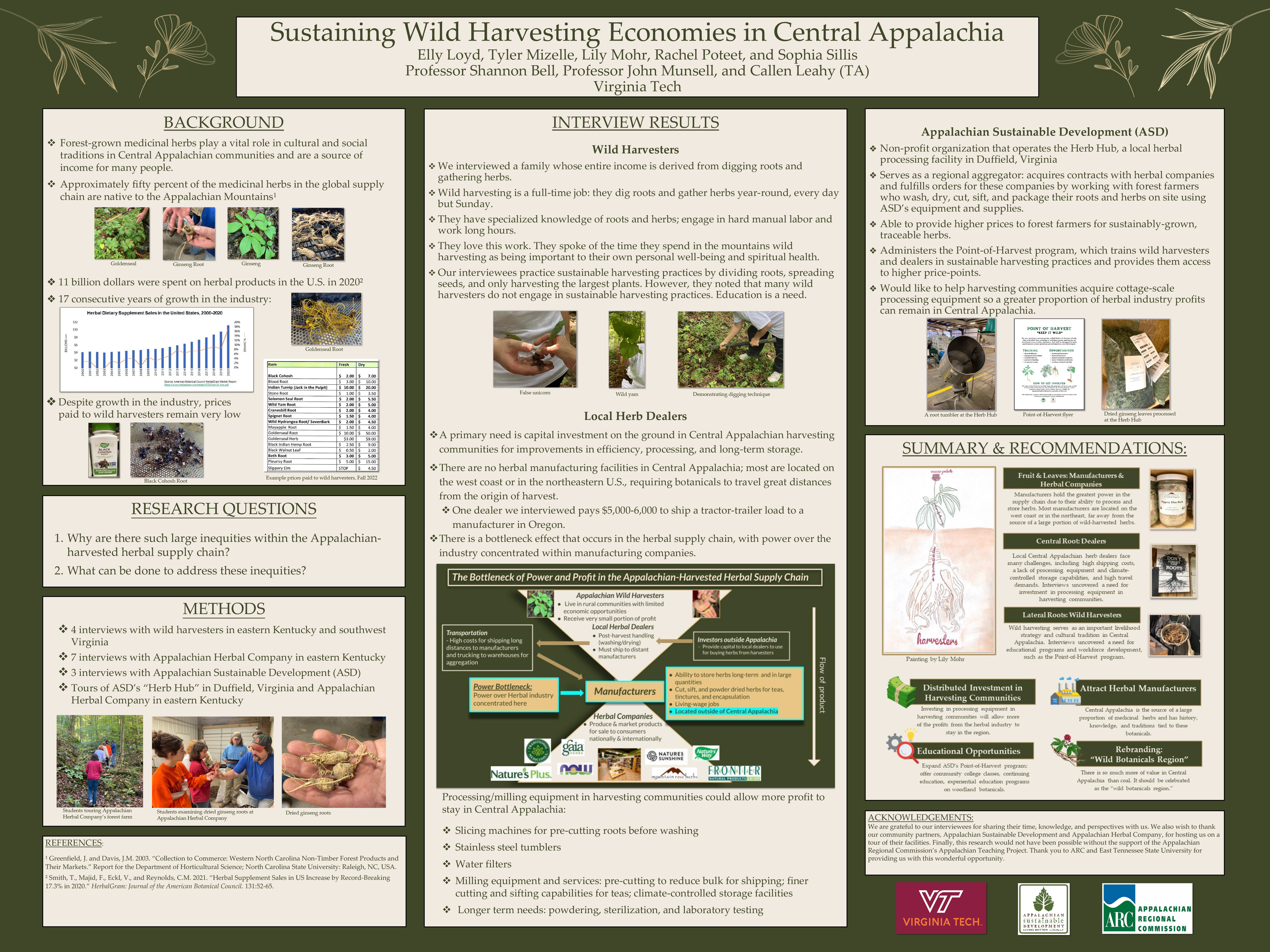
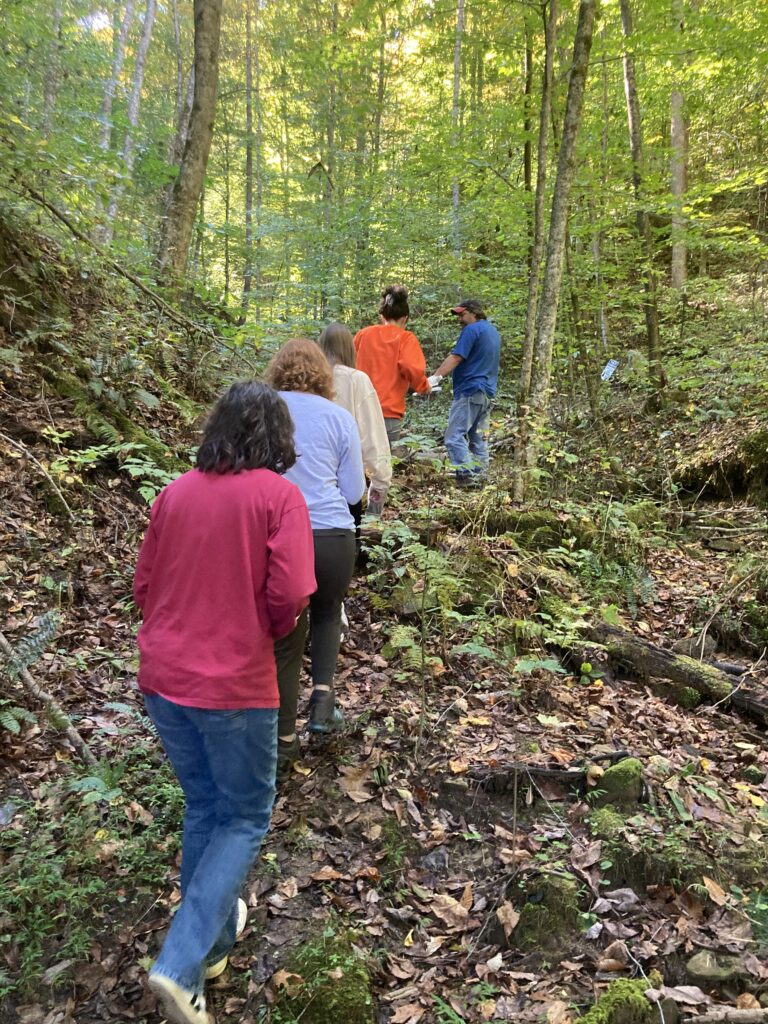
With the support of an Appalachian Collegiate Research Initiative grant from the Appalachian Regional Commission, Professor Shannon Bell and students in her Fall 2022 Appalachian Community Research class worked with partners at Appalachian Sustainable Development and Extension Professor John Munsell to investigate inequities in the Appalachian wild-harvested herbal supply chain. This project sought to answer two questions: (1) Why do wild harvesters receive such little pay for the roots and herbs they collect? and (2) What can be done to retain a larger share of herbal industry profits in Central Appalachian communities?
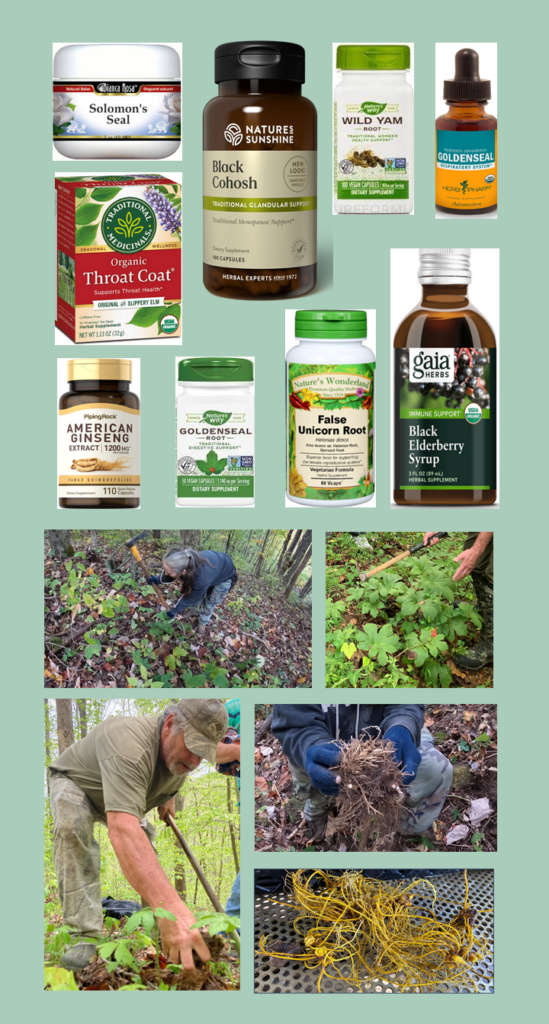
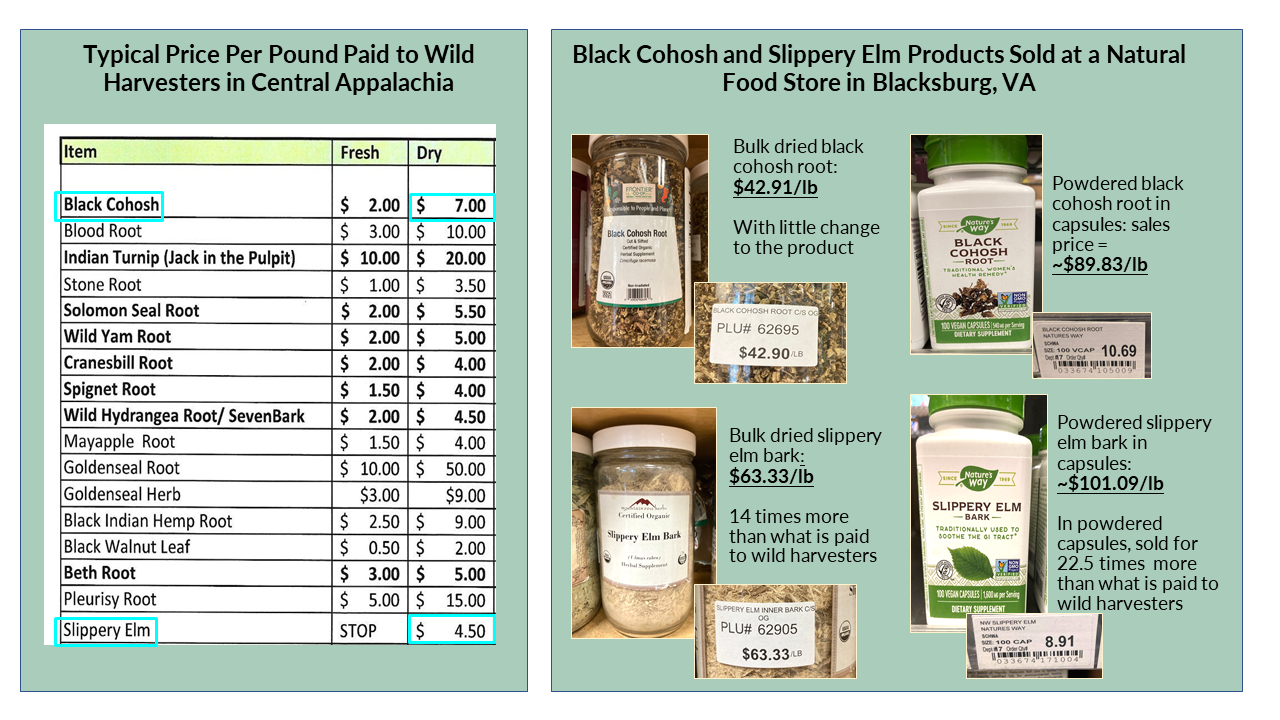
Through conducting interviews and participant observation with a root-and-herb buying business and wild harvesters, the team found that a primary challenge facing the Appalachian herbal industry is the lack of herbal manufacturers in the region. Most of the businesses that mill dried herbs into teas and powders for herbal supplement companies are located on the west coast or in the northeastern U.S., adding tremendous shipping costs to local buyers’ expenses and leaving them little room to pay wild harvesters more for the herbs they collect. In addition, prices paid to local buyers have remained static, despite increases in market scale and retail prices. Our interviews suggest that capital investment on the ground in harvesting communities for distributed access to processing equipment that can cut, sift, and powder dried herbs could go a long way toward keeping more of the profit from the herbal industry in Central Appalachian communities.
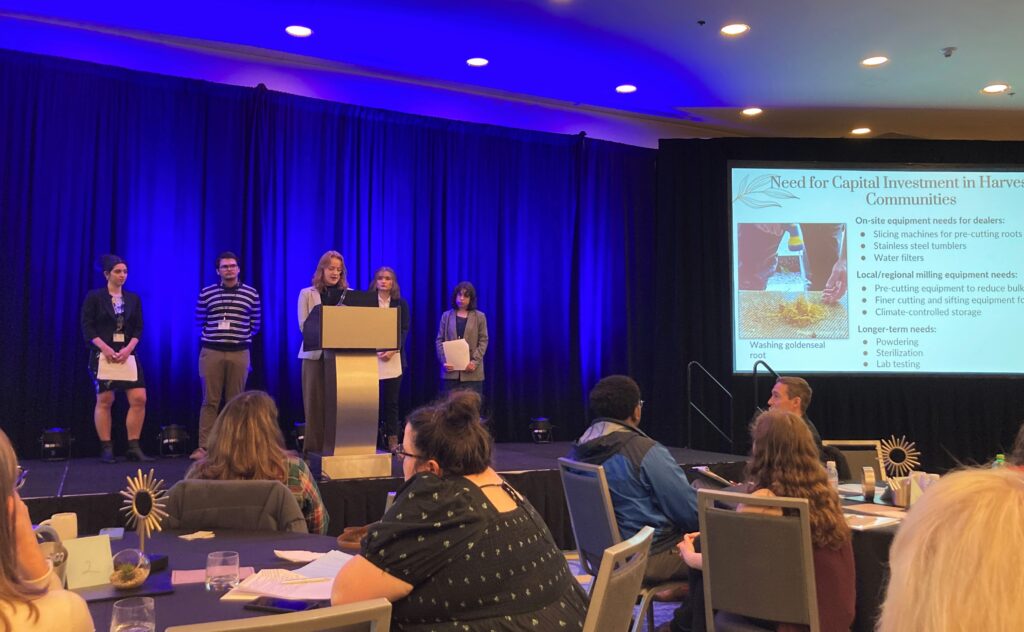
This research, which Professor Bell and her students presented to herbal industry representatives, community partners, and at the 2022 ARC Appalachian Collegiate Research Initiative Symposium, has continued with support from a Scholars grant from the Virginia Tech Institute for Society, Culture, and Environment (PI: Bell, Co-PI: Munsell) and an Appalachian Regional Commission ARISE Planning Grant (PI: Munsell, Co-PI: Bell, Co-PI: Trozzo). Through this support, the Forest Botanicals Region Social Ecology Lab recently launched a mail survey and semi-structured interviews with root and herb buyers in Central Appalachia to inform the development of strategies for keeping more of the profits from the herbal industry in the region.
Read more about this project in the VT News